

APIDocs
API reference corrections and a rebuilt developer docs experience
The API reference is now generated end-to-end from the live spec pipeline, which fixed several long-standing documentation bugs at the source:- Status enum values are documented in their real UPPERCASE form (
RECEIVED,PART_PAID, …) — the lowercase values previously shown on some endpoints were never accepted by the API. The new generated Vocabulary page lists the complete value set for the core integration enums — statuses, exceptions, approvals, address types, stop types, payment statuses, and document types — straight from the live schema. - Invoice ⇄ shipment linking is documented:
POST /api/rest/invoicesaccepts the nestedinvoiceShipmentsrelation at create time; the reference now shows its real schema. - Authentication and error responses are in the spec: every endpoint documents the
AuthorizationAPI-key scheme and the real flat-JSON400/401behavior, and the interactive playground offers the staging server in its server dropdown. - Behavioral contracts on the endpoint pages: where an endpoint has a non-obvious
contract — retry safety, delete semantics, pagination defaults, in-
200business errors — it’s stamped onto the generated reference page, linking to the guide that owns the full story. - Reorganized navigation: a Start tab (conventions, contracts, and planning pages) and a Build tab (guides organized by what you’re building) replace the single Guides tab, with Error handling rebuilt around the API’s real error strings.
- This changelog is now subscribable via RSS.
APIDocs
Purchase orders and vendor invoices API guide
Added a developer guide for purchase orders and vendor invoices: upload a PDF via the standalone supporting-doc presigned flow (PURCHASE_ORDER / VENDOR_INVOICE),
poll until parsing creates the record, then list, search, and patch headers and line
items. Linked from the introduction, quickstart, and API Reference start-here cards.APIDocs
TMS integration guides and AR coverage
Added two new developer guides: Syncing foundation entities (customers, carriers, shipments, bills) covers the prerequisite data every TMS integration needs, and Managing customer invoices (AR) documents the full AR invoice lifecycle — creating invoices, adding line items, attaching documents, and tracking status. Updated the introduction and quickstart with a developer onboarding path.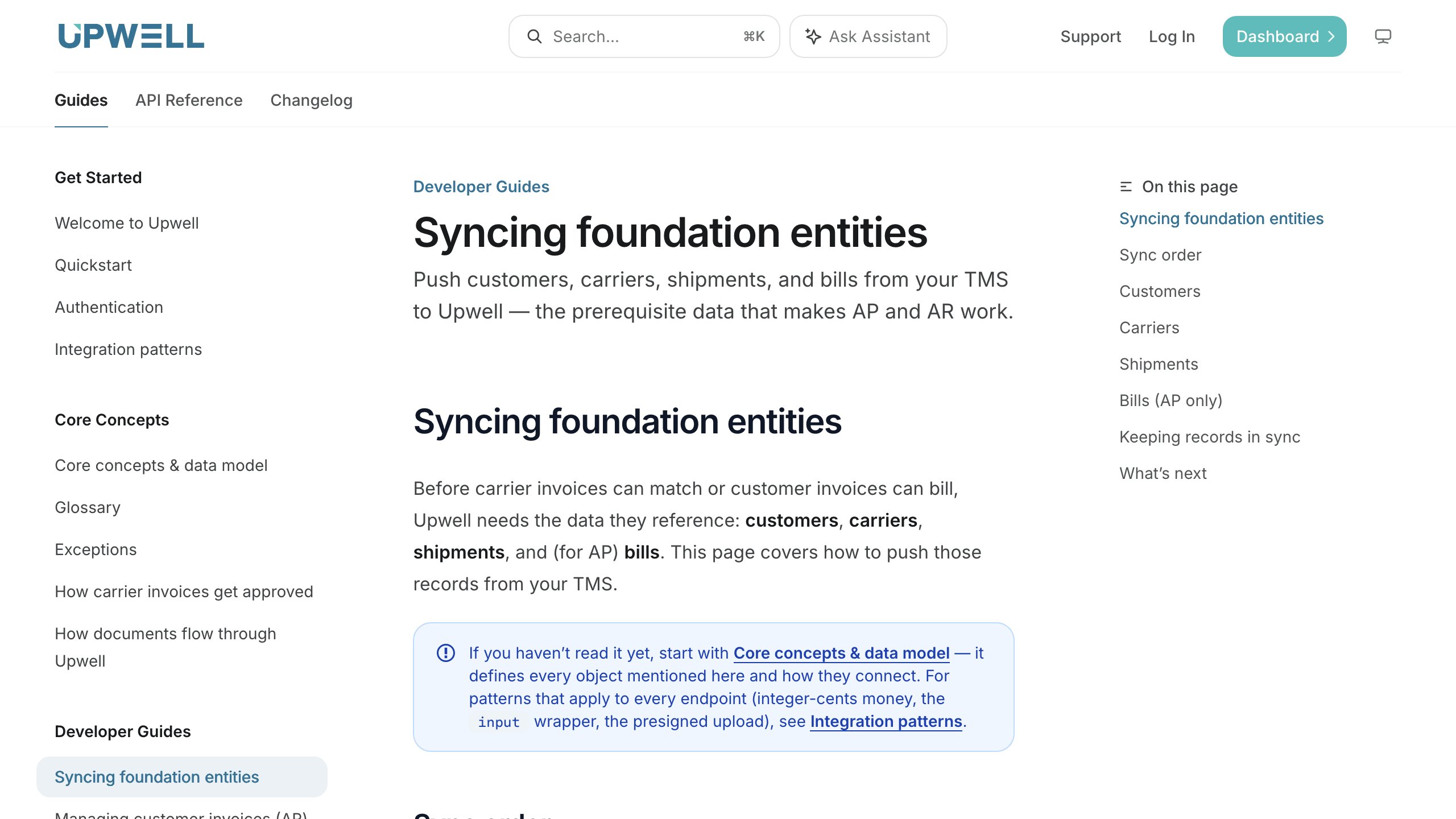
The Syncing foundation entities guide
APIDocs
Developer docs and a filtered API reference
Launched the Upwell developer docs with a filtered OpenAPI reference generated from the live API, plus the first API guides for carrier invoice submission, status, and approval, shipment documents, customer payments, and webhooks. Added a Core Concepts data model overview so every guide shares one vocabulary.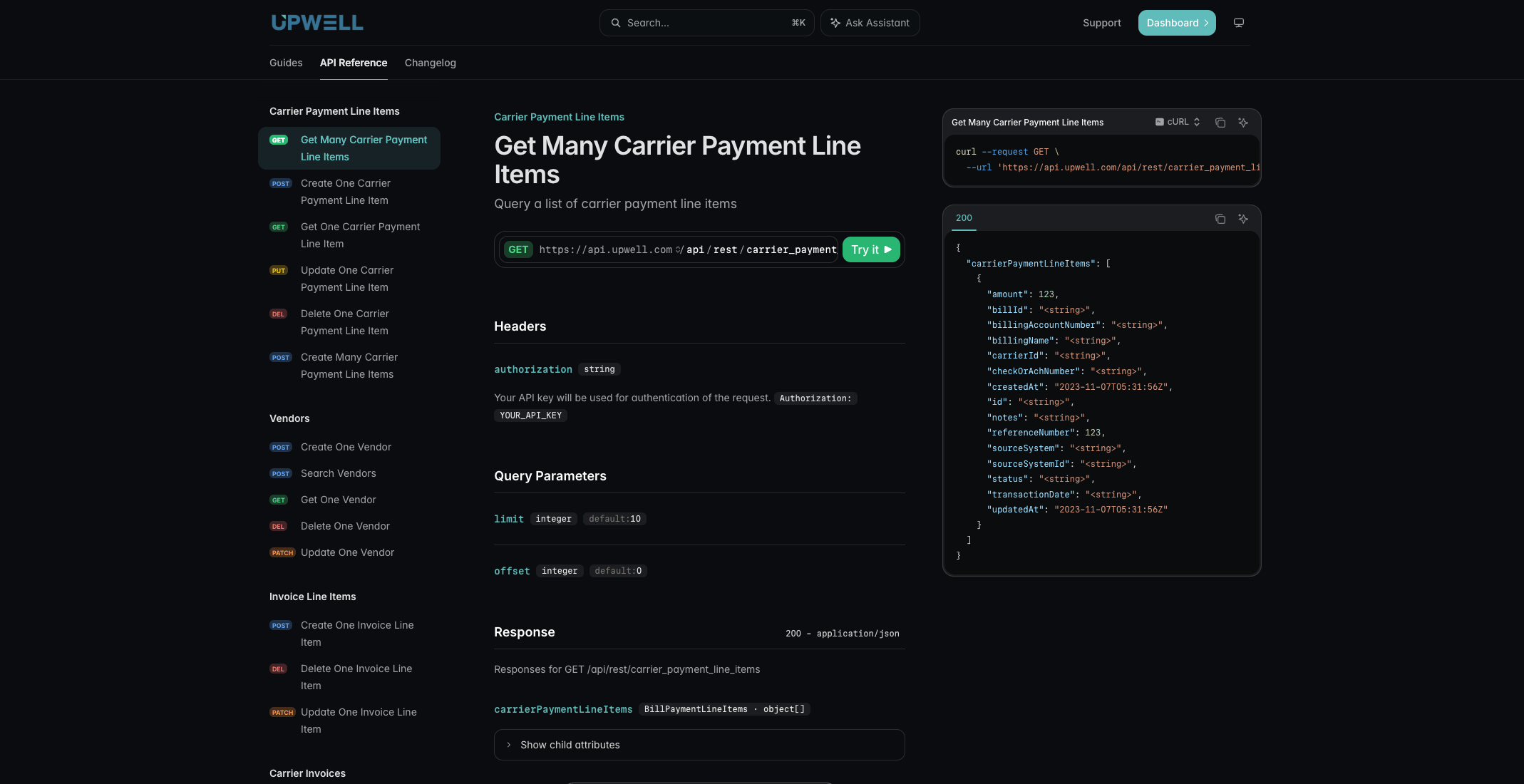
The interactive API reference